I recently finished Reminiscences of Levi Coffin, the reputed president of the underground railroad: being a brief history of the labors of a lifetime in behalf of the slave, with the stories of numerous fugitives, who gained their freedom through his instrumentality, and many other incidents.
Yes, that’s the entire title. I read the original on my Kindle, which was 748 pages and I have absolutely no regrets! This is a treasure-trove of history from someone who had a wide range of experiences related to slavery. He not only cared for and helped transport thousands of fugitives, he raised a lot of money for their care and the care of thousands he never met. He knew judges and policemen and prominent citizens he could call on for help.
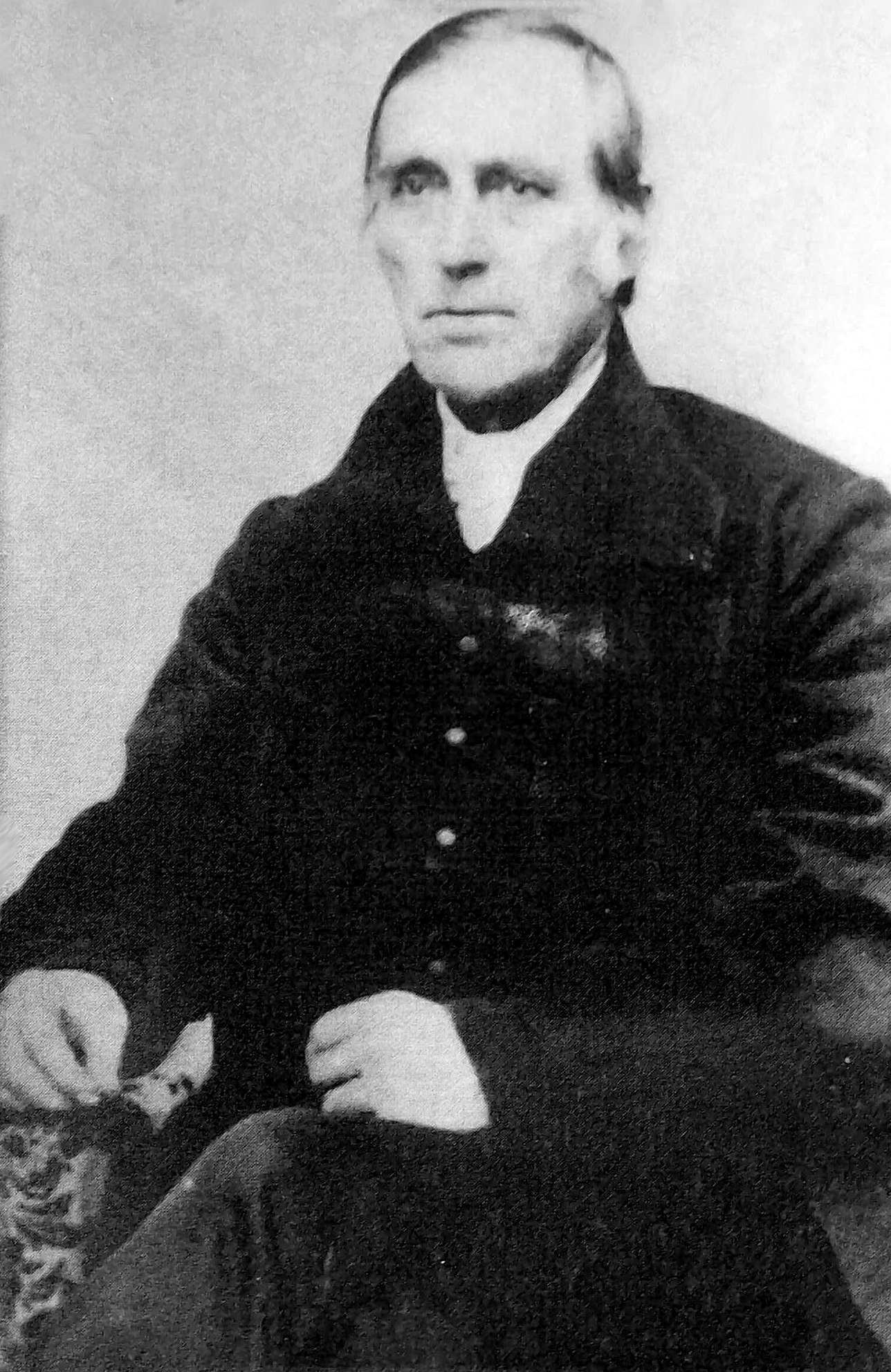
I would love to meet this man one day in heaven. Being a Quaker, he was opposed to any kind of violence and he kept to the laws of whatever place he found himself. However, he used his intelligence and ingenuity, along with a sense of humor, to outwit his opponents and the slave catchers. That alone is enough to make Levi Coffin a fascinating figure from history, but he and I share a common ancestor. My 10th great grandfather was Tristram Coffin (b.1609, Brixton, Devon, England. D. 02 OCT 1681, Nantucket). I am descended from son James and Levi is descended from son John. This makes Levi Coffin my 4th cousin 7x removed. (Thank you Ancestry.com)
He is most known, of course, for assisting escaped slaves through the Underground Railroad. He was also a prominent businessman who once ran a warehouse in Cincinnati that sold slave-labor-free goods. He recruited folks who, according to his words, lacked the moral courage to house fugitives but wanted to help. These folks contributed money, made clothing, and cooked for the fugitives. Toward the end of the Civil War, when these fugitives no longer needed the railroad once they were free in the north, he raised funds for contraband camps. These were the places the slaves were housed in the south when they escaped behind Union lines. Levi, along with other Quakers, worked to clothe and educate the Blacks. He even went to Europe to fundraise and found this part of the book very educational. He had many friends in Europe he’d met in America who believed, and help convince others, that England played a part in the suffering of the enslaved. They brought slavery to America and they bought cotton grown by the labor of slaves. Levi did not think of himself as a speaker, he had a soft voice, but he continued to speak to the wealthy Europeans across England, in Ireland, in Northern Ireland, and in Scotland. Here’s something I hadn’t heard before. The people in Ireland said they owed a debt to America and to the Quakers living in England and Ireland for their help during what is most commonly called The Potato Famine. I didn’t know the Quakers had set up soup kitchens and worked with Irish farmers to teach them how to grow crops other than the potato. Sure, a million Irish died during that famine but how many survived because of this Christian charity? I asked Google and found out they saved thousands. How many Blacks did Levi Coffin, his wife Catherine, and his fellow American Quakers save? Perhaps tens of thousands. I find this amazing.
There are many instances related in this book of fugitives Levi helped escape, some of them who were actually free but were kidnapped and sold into slavery, including Stephen, the first slave Levi helped when Levi was just 15 and living in North Carolina. He took the time to talk to the slaves after a day of corn shucking, which was a neighborly event. Learning his story, he spoke to his father who tracked down the person Stephen had been working for in the north who then came after him. It’s a longer story but ended in Stephen’s freedom. There are stories that don’t end happily, of course, but most of Levi’s efforts were successful. Levi Coffin is a man that should not be forgotten. If you haven’t read his story, I encourage you to.
From Wikipedia:
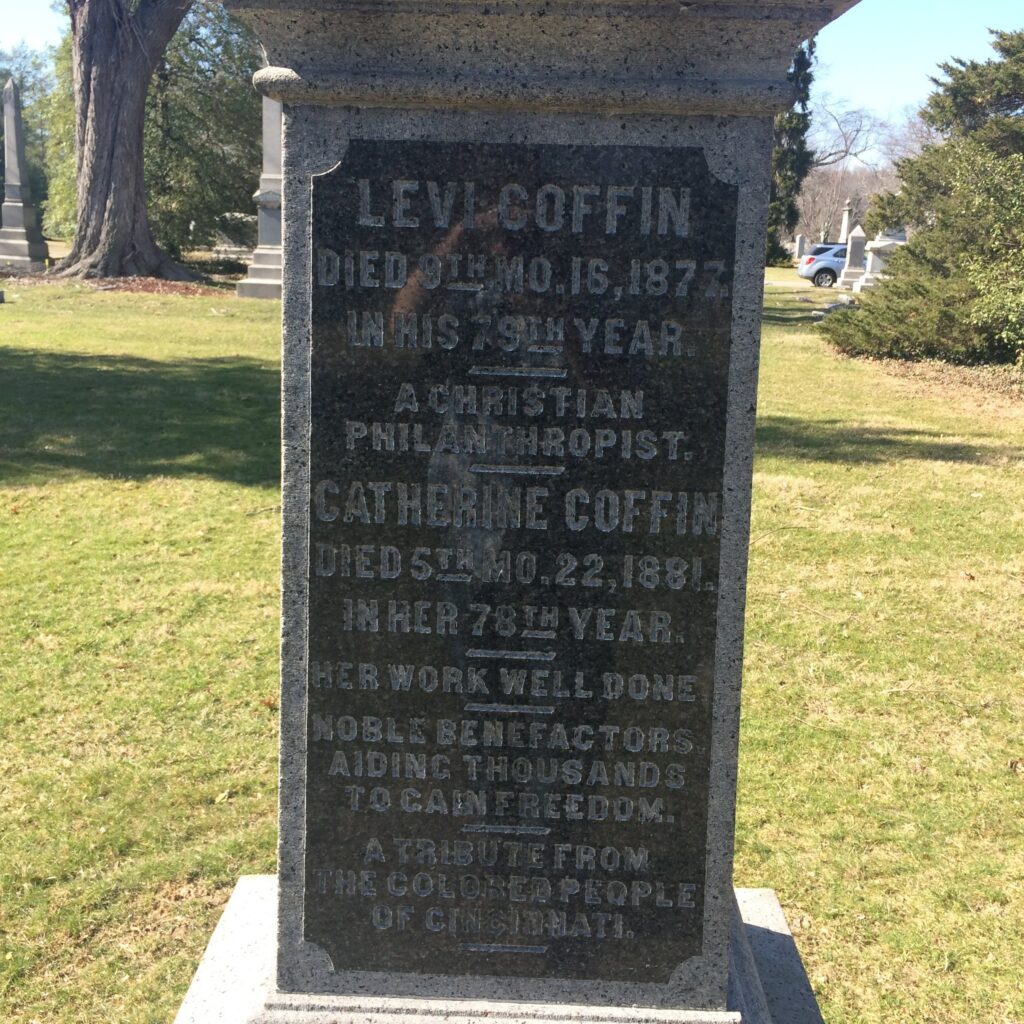
Coffin died on September 16, 1877, at around 6:30 p.m. at his home in Avondale, Ohio. His funeral was held at the Friends Meeting House of Cincinnati. The Cincinnati Daily Gazette reported that the crowd was too large to be accommodated indoors; hundreds had to remain outside. Four of Coffin’s eight pallbearers were free blacks who had worked with him on the Underground Railroad. Coffin was interred in Cincinnati’s Spring Grove Cemetery in an unmarked grave.[48] Coffin’s wife, Catherine, who died four years later on May 22, 1881, is buried in Spring Grove Cemetery as well.[49]
You can read his book free online here.
Here’s something else! His grave did not remain unmarked. A group of Black citizens of Cincinnati raised money to mark both Levi and Catherine’s graves, as a kind of push back to all the Confederate statues that were being erected in the early 20th century. You can read about that here.